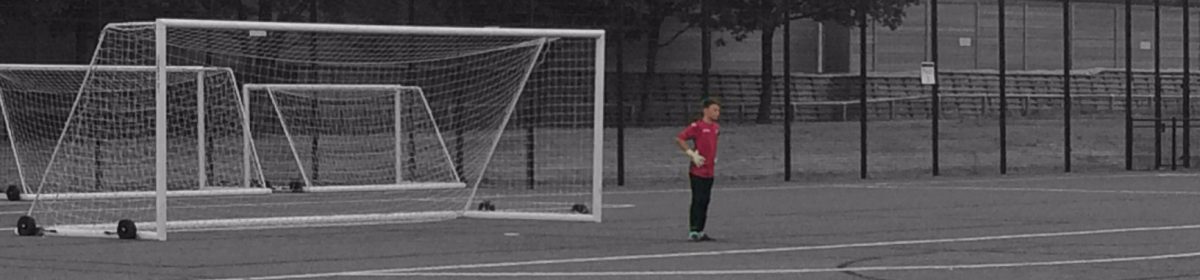
Junior football, as with many other sports can be an expensive way to spend your time, or more accurately, an expensive way for your kids to spend your time.
Most grassroots clubs are self funding in some part. It may be that parents donate (apart from their time) financially in a variety of ways. Speaking from experience, it can be as little as paying subs, weekly, monthly or annually, helping with start up costs for the stock for a tuck shop at the start of the season or donations for raffle prizes for home games.
There’s also the possibility of paying towards playing kit or training gear, although the teams my lad has played for have never really asked for this as they have been fortunate enough to have very generous kit sponsors.
The only time this actually happened was one season when money was particularly tight and the manager asked parents if they would be willing to pay towards the cost for their own lad’s tracksuit top, as this would likely be the only way they could be afforded. We said we’d happily pay the full amount for our lad’s top. As did many of the other parents. The cost was £27 – before any embroidery costs which the club would have picked up. One parent refused to pay anything, point blank, so that was the end of that idea.
Another cost to bear in mind is for boots. This can be an expensive piece of kit due to new ranges coming out every five minutes, usually endorsed by Messi, Ronaldo or the like. Generally your own little Lionel or Cristiano will get about a season’s worth of wear out of a pair before you’re forking out again – either because they no longer fit, or aren’t the right colour. The last 12 months has seen our lad move into adult sizes, which also means adult prices. For footwear costs, it helps if you work in a bank. Or better still, if you can rob one. There’s the possibility that they might also need a pair with studs or astroturf trainers as well as the moulded type.
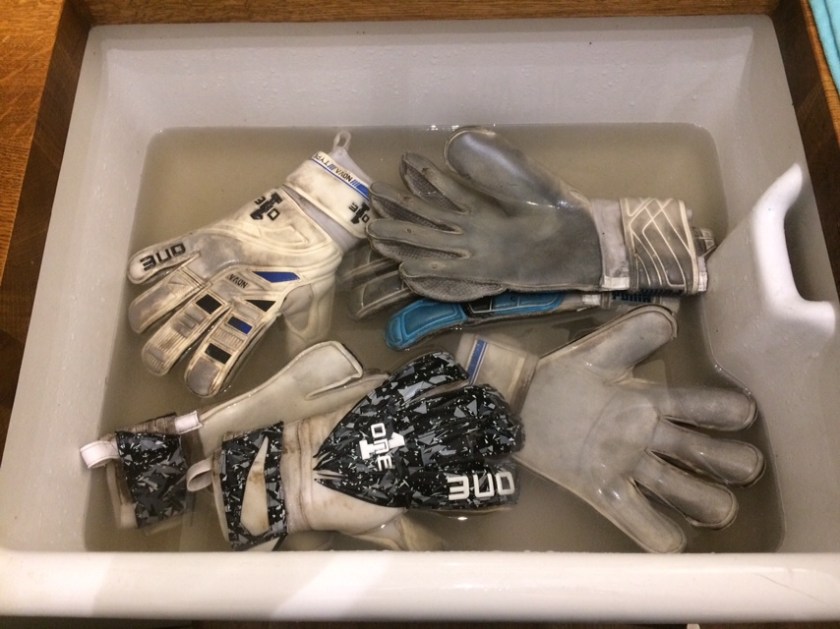
But we’re not done there. Not if your little Messi or Ronaldo actually turns out to be a little Buffon or de Gea. The thing that sets the goalie apart from the rest of the team can end up costing you a fortune. The gloves.
As with boots, there are many different ‘colourways’ and styles, professional endorsees and countless different companies who manufacture them, who will happily help you part with your hard earned cash. The usual suspects are into goalie gloves. Adidas, Nike and Puma all make them. Along with Uhlsport, Sells, Reusch, Selsport to name a few more. Over the last few years there are plenty more small or independent firms who have come onto the scene and from our experience, offer very good quality products.
All this means that although there is plenty of choice out there, it can also be a bit of a minefield if you aren’t sure what your young goalie wants or needs.
For a start, between one manufacturer and another, the sizes can vary. For example my lad is nearly 13 years old and is currently using a size 6 in most brands he’s tried. Recently I won a pair of gloves for him in a competition. He hadn’t previously used this particular brand, so when they asked what size I wanted, I went with a cautious size 7, assuming if anything, they’d be too big and he’d grow into them. As it turns out he can hardly get them on. The brand definitely plays a part in the irregularity of the sizes but as in this case, so does the ‘cut’ of the gloves.
The cut of the gloves is basically how the palm and the back of the gloves are stitched together, which in turn determines the type of palm and in a lot of cases, how tight or loose the gloves feel. I don’t remember any real kind of choice of cut when I was playing. Gloves tended to have either a flat palm – which is pretty much as it sounds, or they were a ‘roll finger’ style, which are similar to a flat palm but the fingers on the palm of the gloves wrap round the goalie’s fingers more. I would guess the most popular cut at the moment is the ‘negative’ which also has quite a flat palm but the stitching is on the inside of the glove, creating a tighter feel for the goalie’s hands. This was the style of glove I won in the competition – by coincidence my lad’s least favourite cut.
The list of cuts goes on and on. There are hybrid cuts, which as the name suggests is a combination of two different types, such as a flat palm and a negative cut. To confuse matters even more when it comes to hybrids, companies tend to combine whichever types they want, so there are plenty of different hybrids out there.
The type of latex used in gloves will also determine how much you end up paying out. Generally, the softer the latex, the better the grip but also the palms don’t tend to last as long as a firmer latex with a less convincing grip.
Also worth a mention are ‘finger savers’. These are plastic spines that can be inserted into the back of some gloves, behind the fingers. The idea of these is to protect the goalie’s fingers by preventing them being bent back. I’m not a fan of these in any way. I don’t think they’re needed as your young goalie should only be playing against other kids the same age, meaning they aren’t going to be facing many shots that their hand can’t deal with. They’re also very restrictive by their nature, meaning a young hand can’t move freely enough inside the gloves – in my opinion. I think they’re a gimmick.
Through social media there are many companies who offer discounts or special offers which can certainly help with the cost of buying gloves. I’ve taken advantage of several but now that my lad is taking his football more seriously, there are certain cuts and brands that he favours, so it narrows down my options a fair bit.
Recently I entered his details for a partial sponsorship for gloves. I wasn’t expecting to hear anything back but to my surprise I received an email offering us a 12 month deal. To take advantage of the offer my lad must only use gloves bought through the company and we need to send photo’s of him wearing their gloves for them to show on social media. There are four brands to choose from, one of which is his favourite (The One Glove) and another is a brand he was wanting to try next (S1). Buying gloves from either range will give us, or more specifically me, a 15% discount on every pair bought.
This type of offer is great when he’s playing at least once and training at least twice a week and with the new season starting this Sunday, he can’t wait to get spending my money on new gloves. At least it’ll work out a bit cheaper this year.
Keep the faith

 Keeper of the faith