Junior football can bring out the best in people and as most people who have ever been to watch it will tell you, the worst too.
It can turn grown men and women and even the young players themselves from passive, calm individuals, into shouting, snarling, swearing so and so’s. I don’t really tend to go and watch junior games, other than the ones my lad plays in. Occasionally we’ll go and see how his old team mates are going on if he hasn’t got a game on a Sunday but generally my only spectating is when I’m coaching him. When we watch his old team play, we want them to win but if they don’t, it’s not the end of the world and it’s a good chance to catch up with some old friends and be able to actually relax while watching a game.
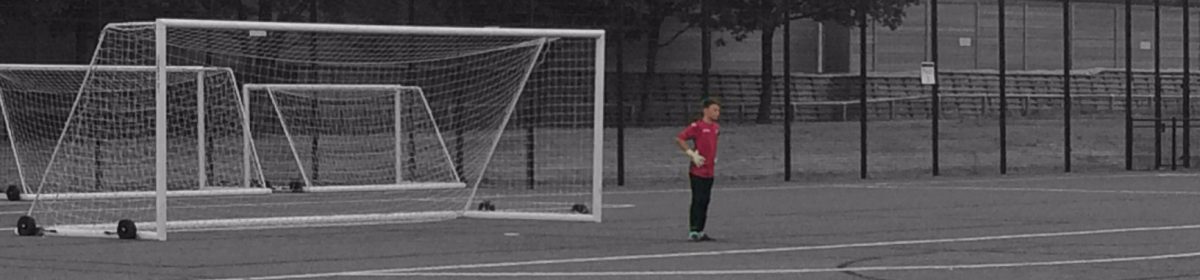
When I’m on the sidelines for one of his games, I’m 100% involved but I’m thinking about the game from his individual point of view, not necessarily the more rounded view of the game that other parents or the other coaches will have, looking at the outfield players. Because he’s the keeper, I get nervous. Very nervous at times but if anything, that makes me more quiet and introverted during matches, looking at his positioning, watching his body language, making sure he keeps his concentration and ultimately, hoping he plays to the best of his ability. I can get engrossed in it and often lose track of what’s happening elsewhere on the pitch. But because of this I tend to be more subdued than normal.
Over the last few seasons, there have been parents who are a bit more animated once the first whistle has blown.
I remember a fair bit from his first couple of seasons but none of it was because of nasty supporters. It was all very good natured and the overwhelming feeling was of supporters from both sides genuinely wanting all the players to do well, develop and learn from their game. They didn’t mind the referee taking time to encourage them if a throw in wasn’t the best, they didn’t get uptight when one of them made a mistake, they just encouraged.
I noticed a change in behaviour creep in during the u10’s season. Some weeks, the occasional critical voice could be heard from the sidelines. As you might guess, this tended to be aimed at the referee. But it wasn’t always reserved for the man in black. On some Sundays a parent could be heard criticising the manager of the opposition, or even their own son or daughter’s manager. The first time I heard this I was really surprised. Stunned even by the lack of respect. I think most of the other parents were too, as there was almost complete silence following the remark. I should point out (and I’m not just saying this) it was the opposition parents during this season who were doing the shouting. But generally nothing too ‘in your face’ happened.
Until we got to a cup final that is.
My lad’s team played in a round robin cup competition during that season. The format involved nine teams. Over three consecutive weeks, each team would play two other teams, after which they would be graded based on the results. The final was played on the fourth week.
(I should point out that this was the two-team system. If you aren’t familiar with it, due to the vast number of kids wanting to play junior football, most teams had one large squad, split into two teams who played against other clubs who were in the same situation. So home ‘team a’ play against away ‘team a’, then home ‘team b’ play against away ‘team b’ and the two match scores are totalled up to give a total final score.)
In the round robin, my lad’s team finished second out of the nine and so would meet the first and third ranked teams in the final. The previous week, the first ranked team beat our lads quite convincingly. By chance, the same team had also been asked to host the final. As you can imagine, there was quite a turnout for the final. For a start, there were three teams all with the chance to win the cup. The hosts, having beat our lads seven days before, seemed to fancy their chances.
What may not have been by chance was the order that the games were played in. The hosts played us first, then we played the 3rd ranked team, then the hosts played the 3rd ranked team. Same again, round robin but it had more than a little whiff of the hosts thinking: we play the team we beat last week (and beat them again), have a rest while the other teams tire each other out, then play the other team and get a win, or maybe even a draw and the trophy is ours.
If that’s how they planned it, it didn’t go to plan.
Their ‘a’ team beat our ‘a’ team 1-0. My lad played in the ‘b’ team and played as well as I’d ever seen him play before. That day he was unbeatable. With more or less the last kick of the game, our ‘b’ team scored and won 1-0, so 1-1 overall. As the hosts, our opponents had to provide a copy of the rule book on the day to prevent any disagreements. We knew exactly what it said about extra time. They didn’t. Exactly the same thing had happened to us a year before.
The rules said that the teams that have just completed the second game stay on the pitch and play extra time of 10 minutes each way. In the event of it remaining a draw, penalties will be taken. (Because it was a round robin, there needed to be a winner in each game.)
The host’s manager, our manager and the referee looked at the rules. The referee then asked the ‘b’ team players to prepare for extra time.
It was at this point that a man came hurrying, almost jogging, down the touch line. I noticed two things about him. He had the host club’s badge on his jacket. And he was furious. His opening statement was that he was the club secretary and he wanted to know what was happening. So I told him, following the rules.
“But how is that fair? The boys from the first game should play again. You can’t just play the boys from the last game, it’s not fair!”
“It’s in the rules. Your manager’s got them there.”
As he looked at the rules, “So, you’re saying you’re not going to let the boys from the first game play again?”
“The rules state…”
“You can’t do that!”
It was obvious from the two games played that they’d played a stronger team in the first game, hoping to get a big lead going into the second game. We also found out later, his son played in the first game.
Our lads scored another four goals without reply in extra time. He came over again at full time, shouting and bawling in front of our lads that we’d played to win at all costs and he’d be contacting the league regarding our conduct. We asked him to leave while we prepared for our second game. Eventually he did.
Our second game finished 1-1 overall, so extra time was needed again. Back came our friend, no calmer than before. He kept referring to playing times, saying that we were exceeding playing times and were in breach of league rules. Once again, we advised him that we were playing by a set of written league rules, printed off, and provided by his own team. While this was going on, my wife was watching on from the other side of the pitch and having realised what was happening, tweeted the league, asking what their stance was. The league’s response? “Refer to the rule book.”
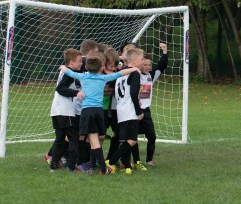
After no further goals in extra time, it went to penalties. As time was running over, the referee suggested to both managers that each team take 6 penalties instead of 12. Both agreed. My lad faced the second three of the opposition’s penalties and needed to save two out of the three he faced. He saved the first. And the second. His team mates ran on and mobbed him. They all ran off the pitch, cheering, jumping around and celebrating. Yet again, back he came.
“You haven’t taken enough penalties! You need to take more! Get your players back on the pitch to take the rest of the penalties, the game isn’t over yet!”
The opposition manager just said to me, “You’ve won it mate. Your lads deserve it.”
As the hosts it was their responsibility, before the weekend, to collect the trophy and winners medals. Our friend more or less threw them at our manager. So we did our own presentation, while they were playing out the ‘dead rubber’ third game.
In comparison to how our mate’s Cup Final went, my lad had been made captain for the day, over the two games plus two periods of extra time and penalties my lad kept a clean sheet and got Man of the Match to top it off.
From my experience, there are a few reasons for the change in attitude on the sidelines as the young footballers get older. Until he moved to his current club, my lad was playing a few divisions lower and they won a few and lost a few but enjoyed it and the majority of parents are happy, if their kids are happy. We noticed a difference as soon as his current team got promoted to the top division. Some of the lads he played against seemed to be much more full of themselves, as did some of the parents.
The lads are older now, turning into young men, hormone levels have gone up a notch and generally they are much more competitive – in my book competition is a good thing – which means tempers are bound to fray at some point.
I think the biggest problem though, is the competitive nature of supporters, managers and coaches. The competitive element is good for the players. I personally don’t like the way some schools are going, whereby on a sports day there are no winners and losers, everybody just has a go and everybody’s equal. I don’t think that it’s good, particularly in sports, if the competitive nature is taken out. What’s the point in trying to better yourself and become a better athlete if there’s no ultimate goal, or no reason to improve?
Adults on the sidelines however can be a totally different matter. Whether it’s reliving their own (possibly/probably failed) football career through the life of their child, or like the club secretary showing off because the game wasn’t going their way, more weeks than not there’ll be an adult shouting at the referee or swearing at another parent or generally arguing that black is white.
I don’t know that secretary other than from the two times I’ve spoken to him. The second time was a couple of months after, when we played them in the league, again at their ground. We got to there early. My lad was walking into the car park as the automatic gates began to close as I was driving in and he tried to hold them open. The secretary came down the car park shouting and screaming at him. As I moved the car away from the gates, my wife confronted him. He didn’t see what he was doing wrong. Shouting in the face of a ten year old boy, to the point that he was nearly in tears but thought it was acceptable behaviour. My wife wouldn’t let it go, in fact I think the grown man was nearly in tears by the time she’d finished with him.
So out of our two meetings with this man, I can only conclude that a) he’s a sore loser, b) has a short temper and c) doesn’t have any idea that screaming at kids is not on. Sounds perfect for junior football doesn’t he?
(I’m sure he was happier a bit later on when their ‘a’ team beat our lads 5-1. Only for our ‘b’ team to snatch a draw with a 4-0 win.)
The other thing that seems to have a big bearing on parent’s attitudes is when their child moves from one club to another. At my lad’s current club this has happened with a few lads over the last two years. It appears that a move very rarely happens amicably. The new club is always better in the parent’s opinion and the previous club (with hindsight) was never actually that good anyway, so they’re better off out of it. But there always seems to be a grudge held and when they turn up again for the opposition on a Sunday morning it shows.
I had one other ‘run in’ with another parent before I went on to the coaching side. It was with one of his former team mate’s dad. They were leading 1-0 and him and a couple of their other dads were basically having a laugh at the expense of my lad. No other reason than they were winning and full of themselves. The game had been fairly even, which they weren’t used to and maybe it was relief on their part that they’d gone into the lead but they didn’t see me stood there. I said my piece, stood my ground and they shut up.
The problem is, with all these types of behaviour, the players hear and see what their parents say and do and, because it’s their parents, think it must be the right way to act. No doubt throughout their life and probably with their own kids, they’ll mimic it.
But I’ll just keep training my lad, looking out for him on a Sunday, making sure he’s alright and keep my mouth shut. And of course keep the faith.


 Keeper of the faith